

What a wild round of racing it was at the FXR Spring Creek National over the weekend! From Jeremy Martin’s heroic final race, the venue’s unique features, and Jorge Prado’s contrasting motos, the seventh round of the AMA Pro Motocross Championship left us asking a multitude of questions. To get answers, we turned to former pro and NBC on-track analyst, Jason Thomas.
Rain was expected on Friday, but it didn’t come. Did the anticipation of rain affect the way the track was prepped? If so, how was the track different on race day as a result?
I believe it did. The fear was that a well-watered racetrack would turn to mud much more quickly than a harder, drier version. Further, the deeper the track is ripped on Friday, the more able the rainwater is to penetrate lower layers. Keeping it harder and drier on the frontside of expected rain is a bit of an insurance policy against a muddy Saturday.
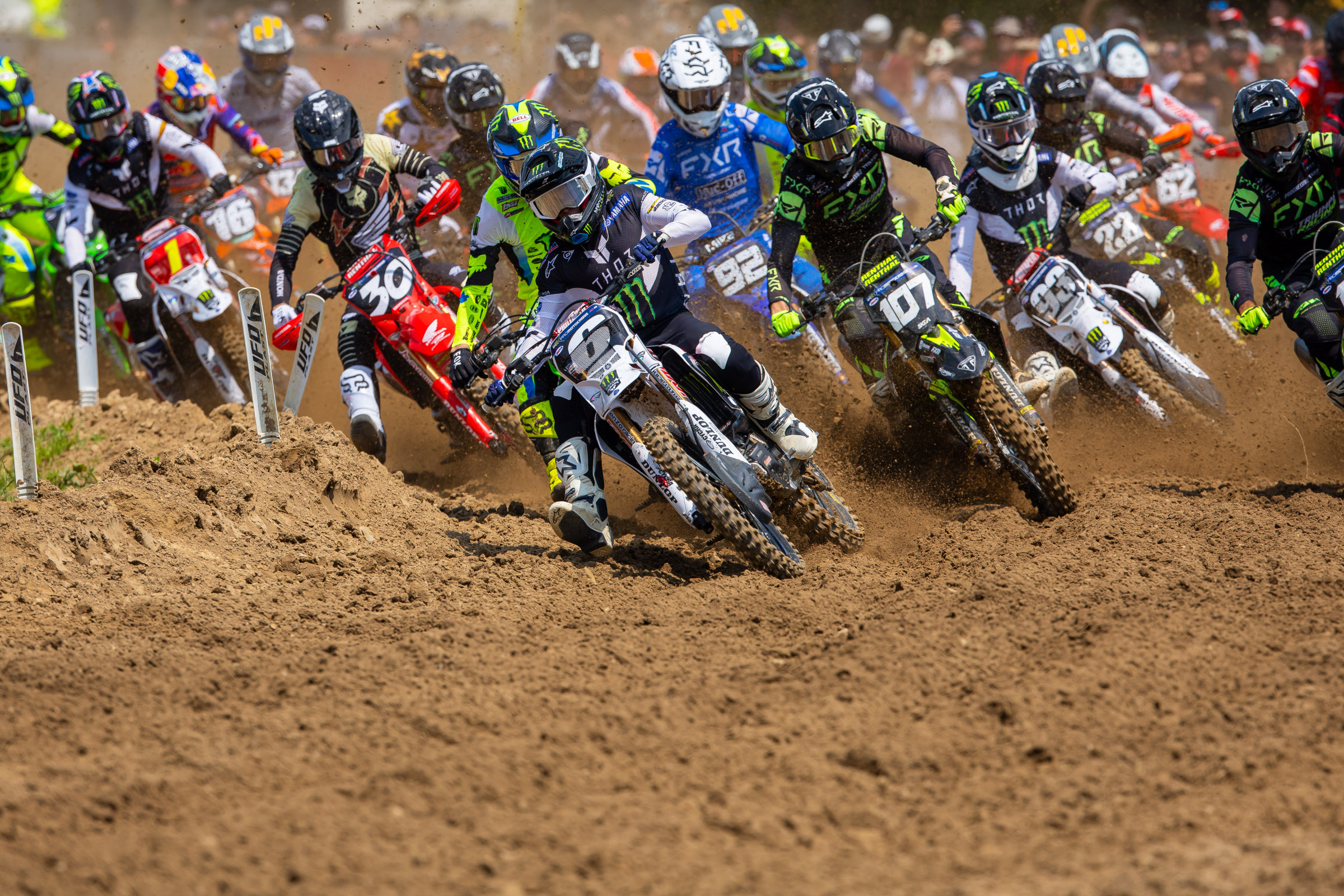
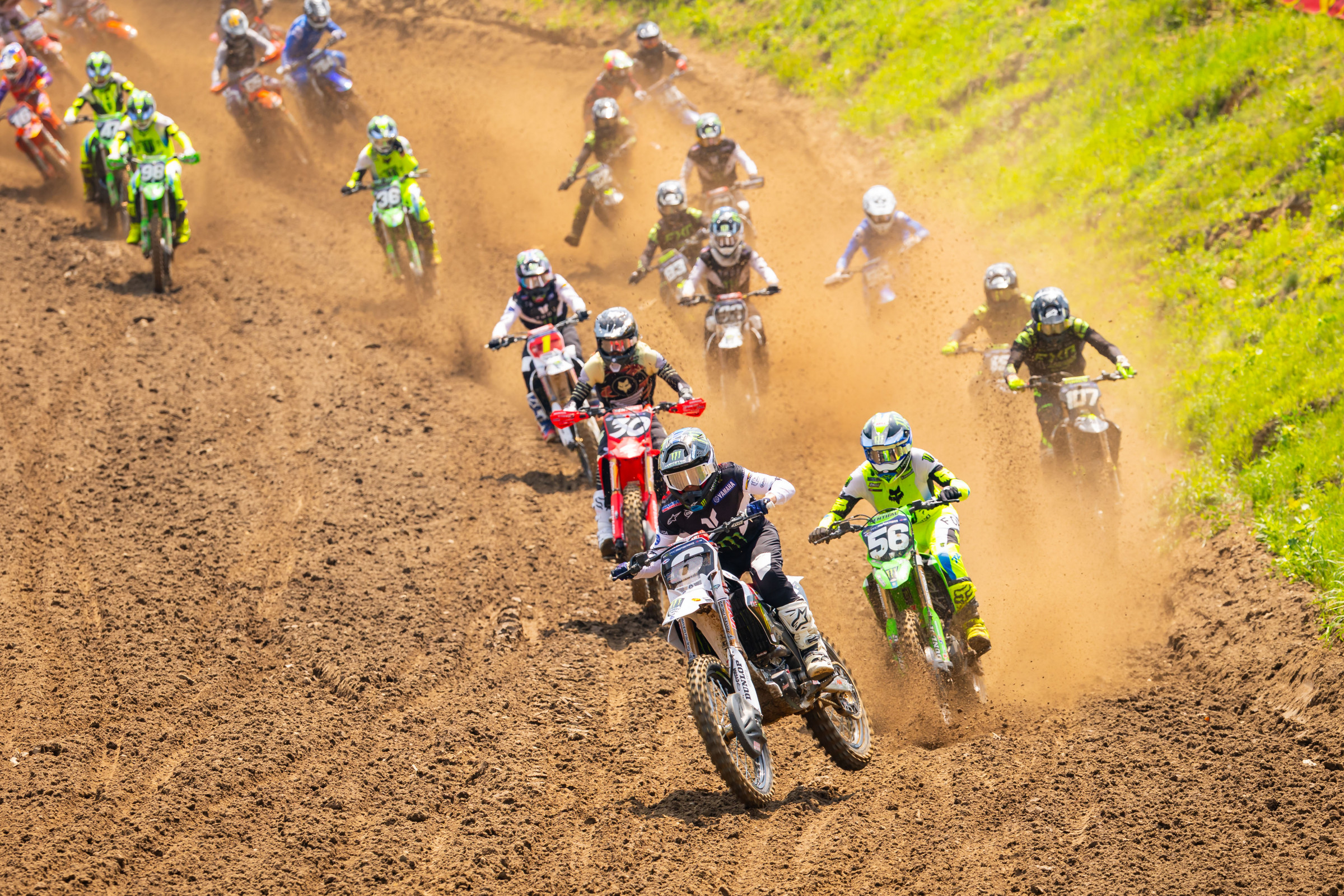
Spring Creek features the longest start stretch in all of Pro Motocross, and it funnels into a righthander. Does the additional speed make this start scarier, and how is the way a racer manages the start different at Spring Creek than other tracks?
The start straight isn’t as scary as the first corner is. All of that speed is brought into a very fast right hander and we have seen big crashes here. I myself have been involved in big crashes on that start. I don’t think riders spend too much time dwelling on it because there’s no upside to that, but the speed through that first corner is notable. Also, the dirt is very deep in that first corner and climb, catching riders off guard at times.

Speaking of Spring Creek’s unique features, Mount Martin is both huge and steep. What’s it like trying to barrel down that hill trying to beat another rider on the brakes?
It’s a test of bravery, nerves, and skill. It’s an opportunity to pass but the penalty for getting it wrong can be severe. The level of difficulty for the elite downhill speed shown here is underrated. When everything in the risk management area of your brain is screaming to slow down and you roll the throttle further, that’s how sick these guys are.

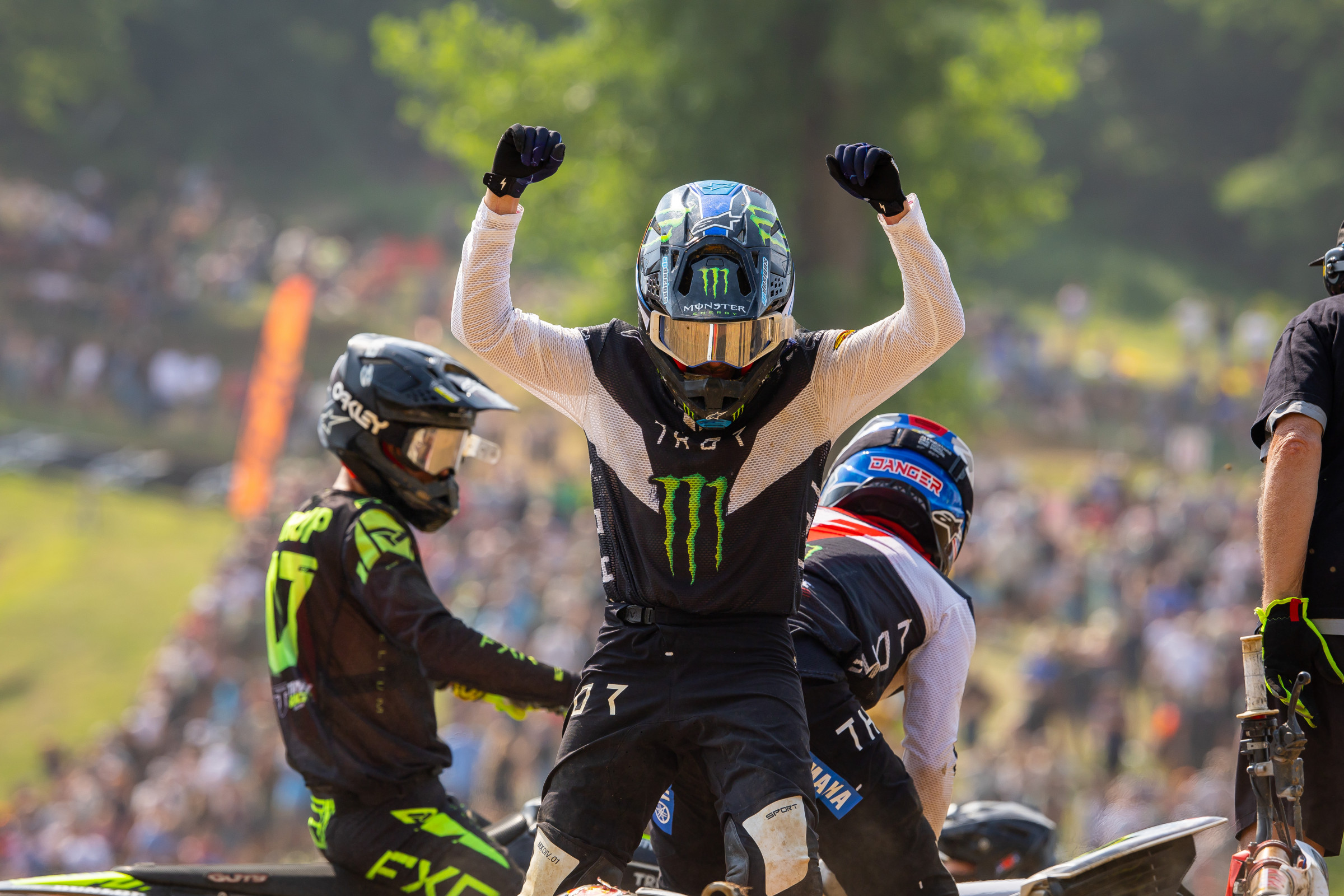
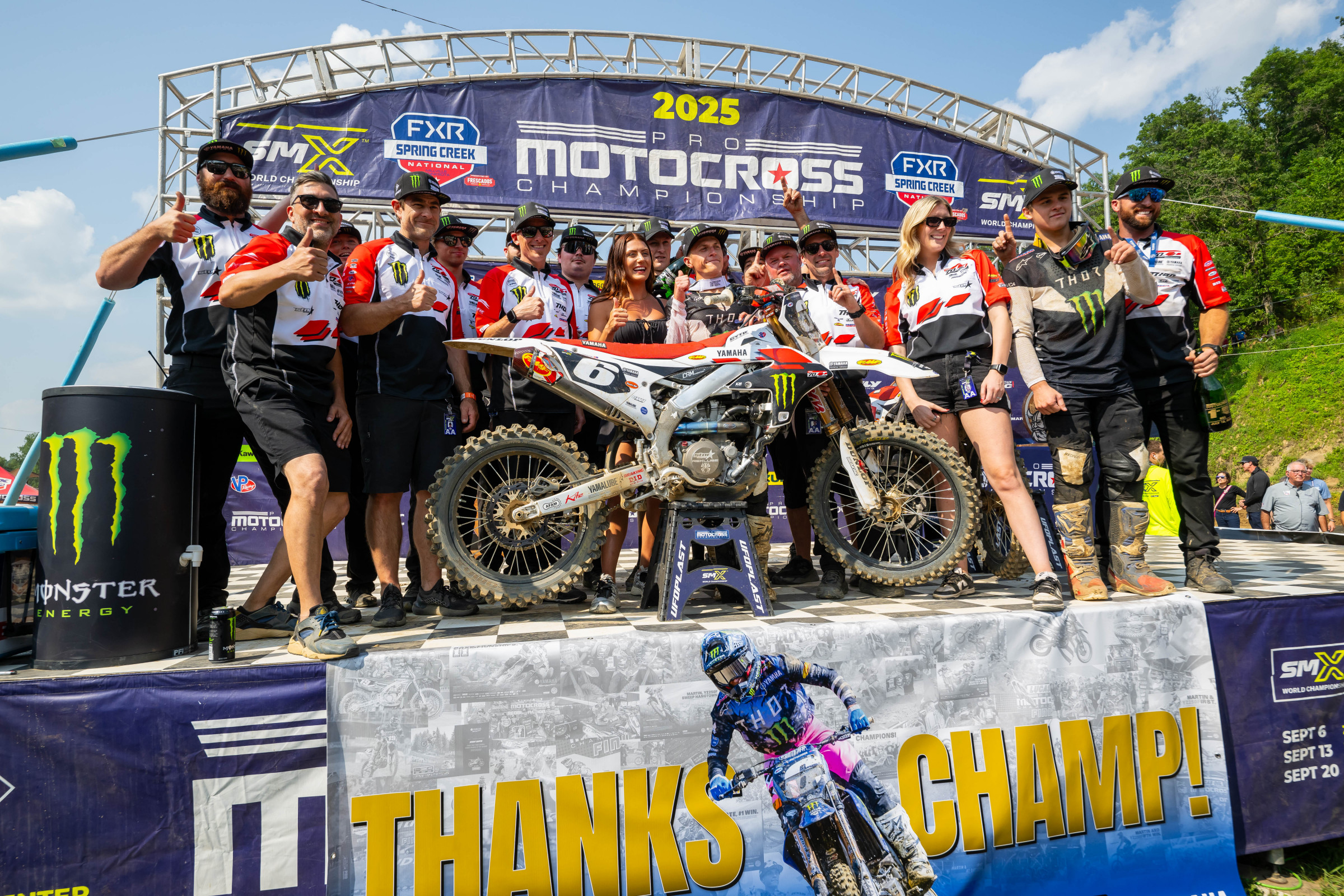
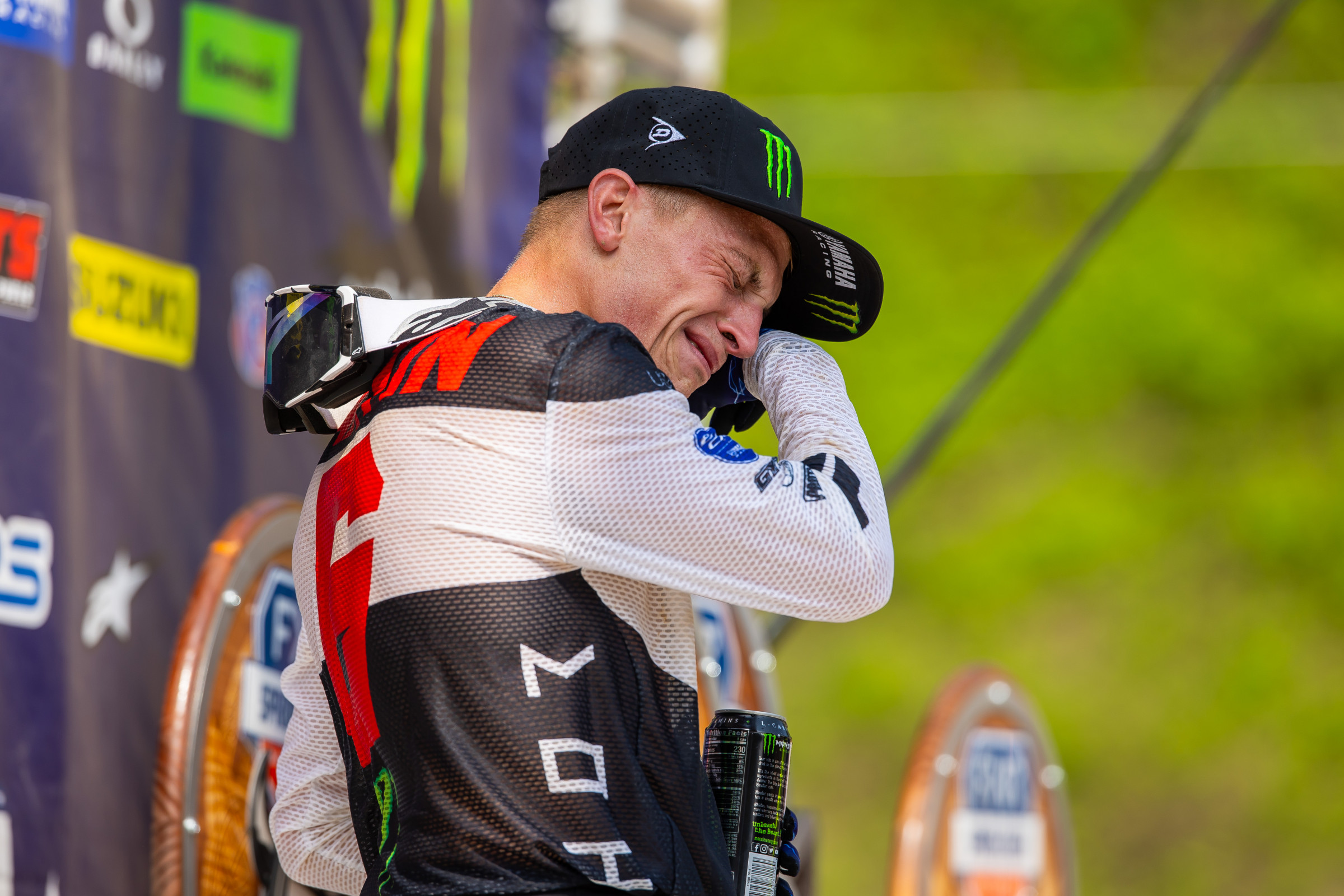
Nobody predicted Jeremy Martin going 3-1 for second overall in his final race as a pro. How was he able to pull this off? Was it the hometown vibe? Familiarity with the track? How was this even possible?
This was an all-time moment. Long term, this will go down as one of the feel good memories in the history of Pro Motocross. That’s not hyperbole. That’s real and fair. As to how he did it, there are a few things. First, he knows this track better than anyone not named Alex Martin. Second, he has the best bike (as do his teammates) in the class. Third, he is in and always has been in elite shape. When you take those three variables and pour adrenaline on top of it, the recipe is explosive. I don’t make a habit of cheering for anyone in any particular race but make no mistake, I was talking to myself those last few laps. The manifesting of thousands of people was palpable.

Jo Shimoda lost his rear brakes in the second moto but still managed to take fourth. In what ways did he have to change his riding style, and how gnarly is it to have to charge down Mt. Martin without rear brakes?
He had to first deal with the mental frustration and settle down. The gestures and looking down were all distracting him from the task at hand. Once he realized his rear brakes were a problem, he then set out to mitigate the damage. He started using the outside lines and opening up his corner angles. That requires less braking. He tried to use the momentum he had built up, even if it meant taking the longer route around the track. That requires more overall speed but if you can’t brake aggressively enough to catch the insides, go with what works. The toughest part was as mentioned, the downhills. Most riders would drag the rear brake a bit to stabilize the rear of the motorcycle. With that impossible, he would likely shift down a gear to cause more engine braking and use the lower gear/higher RPM’s to help slow himself down. This is all happening in real time without time to whiteboard a plan, so it was very impressive that he was able to pivot so quickly. He deserves a lot of credit.

Mikkel Haarup was outstanding, going 4-3 for fourth overall. Was there something about the track that fit his style, or is he simply just rapidly adapting to the American way of racing?
Is it waffling to say both? His starts helped quite a bit but he seems more comfortable with all of the above. The format, the competitors, the culture, the tracks. All of those are new dynamics. Ask Jorge Prado how hard it is to adapt on the fly. I knew he would show up eventually, I’ve seen too much flash from him in the past to ignore.
Tom Vialle crashed on the first lap of the second moto entering the rollers. Did you see what happened? If so, walk us through how that situation got started.
I didn’t see the crash but it’s more adversity for Tom. He’s in a pickle contractually and he needs to hammer home his leverage. This was not that.

What was the difference between motos for Jorge Prado? He got freight trained in the first moto and wound up 12th, but in the second moto he was much better and took fifth.
That first moto was a full mental meltdown. He quit trying. I don’t take joy in that assessment but it’s still what I believe to be true. Frustration won out and he completely spit the bit. The second moto, he didn’t quit and fought. He’s battling many things but mostly, his own mindset. He has to find a way to stay optimistic here or this could unravel in the worst way.
Is it possible Eli Tomac is suffering from a lack of motivation now that he’s out of the championship? He looked good early in the first moto but then all of a sudden he seemed to back off. He also took ninth in the second moto and never looked like he had the fire to move forward.
There’s something very off here. Physical, mental, motivation, sentiment, take your pick because I truly don’t know. But, this isn’t, ‘Yeah man, just was slow.’ There’s more to it than that. Eventually we will learn what’s up but I promise you that there is something afoot.

On the broadcast James Stewart pointed out that Jett Lawrence’s bike didn’t seem like it was handling the track as well as Hunter Lawrence’s. As the moto wore on, however, Jett was able to learn how to ride around it and inch away from Hunter. How hard is it to correct for a setup that isn’t ideal during an actual race?
I agree with JS7’s take here. Hunter’s bike looked much more stable than Hunter’s. These bikes are so touchy that it could be a very small change causing the difference. Jett’s talent was the difference here. He was able to overcome the business of his motorcycle and keep his brother at bay until he finally relented. That’s just Jett being Jett and more proof of what he’s capable of.
The gap was three seconds for 20+ minutes and when I mentioned that it jumped to 5.8. I theorized that Hunter let it go and it immediately jumped to 10+. There is a quiet battle that goes on as riders match each other and the lead rider is trying to “break” the chasing rider. This happens for the lead, for 10th, and for 20th. The dynamic is the same. Hunter finally realized he wasn’t going to catch him and settled. It’s the same exact thing that happened in the first moto, just reverse the roles.