
By Gary Semics
The Washougal track is different from all the other tracks on the National series in that it has loaming top soil with a hard base underneath, a lot of trees that cast shadows, some huge elevation changes and some very fast sections. The temperature is usually mild, with dryer air as well.
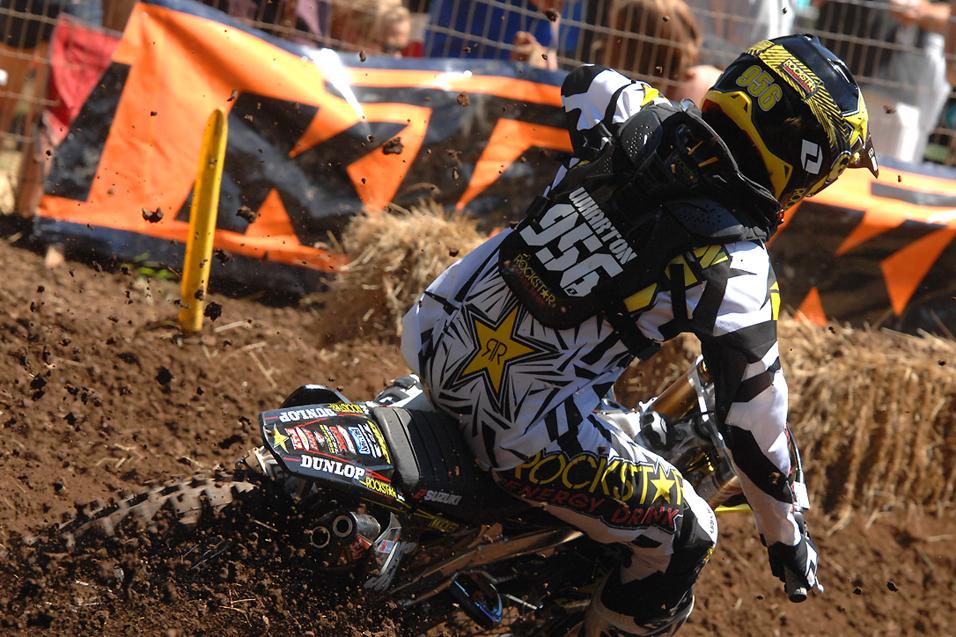
The soil conditions are deceiving because the loamy top soil has a lot of traction but when it wears away the hard base can quickly get slippery. This hard base also develops hard, square, street curb type bumps. With the previous days of rain this year the track did hold the loaming soil in many sections and developed some nice berms (ruts). Riding berms requires very different techniques than hard slick corners. Of course berms offer a lot more traction. The rear wheel must follow the front wheel into the berm so you can't use the rear brake too hard entering the berm or it will slide to the outside of the berm. You can also lean the bike way over and really pull the trigger once in the berm. Be ready for those street curbs, they will be there when exiting the berms on the Washougal track. This means you have to get a lot of your weight on the outside footpeg while your inside leg is still out for the corner. Then as soon as possible get your weight on both footpegs. It also smoothes those choppy bumps out by getting the front wheel to the inside of the berm as you pull the trigger. To consistently make this happen not only are all the correct techniques required but also extraordinary timing, reflexes and balance.
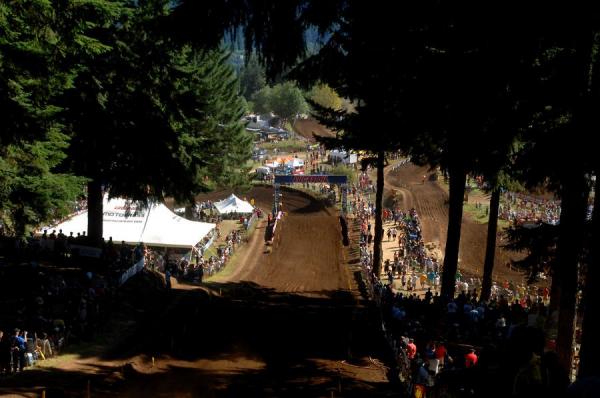
Washougal is one of the most challenging tracks on the circuit.
Carl Stone photo
The hard slick corners are a different story. There's no berm to hook up into so you don't have to worry about the rear wheel following the front. Instead the riders are using the rear wheel to do some of the steering into and out of the corners. This means they are drift sliding into the corner and power sliding out of the corner. To do a drift slide they have to control the brakes while leaving the clutch out. At this time they can still use the front brake as much as needed because it is tracking straight or counter steering a little, so it won't slide out. The front wheel is a lot more likely to slide out when it is doing all the steering. The drift slide is different than a brake slide, which is done deeper in the corner with the clutch in.
The power slide has to come directly from the drift slide or brake slide. This always happens at the most important part of the corner, at the transition, where you go from braking to accelerating, from controlling the brakes to controlling the clutch and throttle.
For all the visual details while I'm explaining the techniques (repeated clips, slow motion and stop action) check out my "Motocross Berm Corner Techniques" and "Motocross Hard, Slick Corner Techniques" DVDs.
As if the soil conditions weren't difficult enough the riders also have to deal with shadows. The eyes can't adjust fast enough going from sun to shade so they just can't see many of the bumps. They have to remember what's there and feel their way through these sections. Some of these shaded sections on the Washougal track are very fast. In these places it's best to know and focus on the most important parts of the sections. This could be something like the biggest bump or where you're going to make most of your turn.
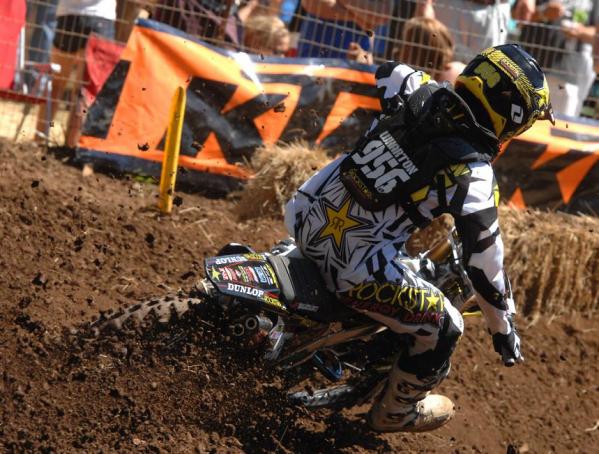
Blake Wharton digging into the loamy top soil at Washougal.
Carl Stone photo
Washougal does have some mercy on the riders giving them a break from the heat and humidity with more mild temperatures and dryer air. One can only truly know what's it's like to race in 102 degrees with 98 percent humidity unless if they have been there and done that. These conditions raise your core temperature and zap your energy quickly. Your body, especially the heart and lungs have to work so much harder just to pump more blood and oxygen to all the thousands of small blood vessel that reach out to the skin, the body's natural radiator. On top of that there's not as much oxygen in the humid air. Compared to the temperatures the riders have been racing in, Washougal is like racing in air conditioning. Couple all that with the elevation changes and beautiful scenery and you have an awesome race track.
Many thanks to Jason Weigandt and Racer X for giving me the opportunity to put in my 2 cents.
Gary Semics Motocross Schools and Technique DVDs www.garysemics.com

